Showing posts with label Cuisine. Show all posts

Jul 4, 2011

Leftovers

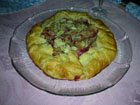
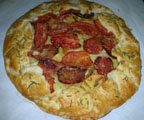
It is a great thing when leftovers look this good.

This is a bowl of tomato soup with sour cream decoration.

Sent from my BlackBerry® wireless device

Jun 27, 2011

Sugar mountain, Dad's 80th birthday


My Dad turned 80 on Saturday, June 25, 2011.


On his actual birthday we went for dinner with family at Grappa Ristorante on College Street in Toronto.

On Sunday, we had a party for him at my sister's place. About 20 people attended the party.

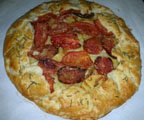
We served potato, cheddar and spring onion quiche made by my sister.


I barbecued hot dogs and asparagus. For dessert we had chocolate cake made by my Mum.


Here is the asparagus recipe. I hope you enjoy it if you make it.


Lisa Allen
Good Food magazine, May 2011
Sesame grilled asparagus rafts


- serves 4
- preparation time 30 minutes
- cook 20 minutes


Griddling or barbecuing asparagus individually can be fiddly, but it's much easier cooking them like this, plus it looks impressive. The rafts go well with chicken or fish.


16 - 20 asparagus spears, about 500g/1 lb, 2 oz
2 tbsp sesame oil
1 tbsp soy sauce
1 garlic clove
2 tbsp sesame seeds


1. With one hand hold an asparagus stalk at its base. Bend the stalk over with your other hand -- the asparagus will break where the woody part ends and the tender part begins. Discard the base. 


Place 4 or 5 asparagus stalks next to one another. Skewer them crosswise in two places -- just below the tips and 3 cm from the bottom -- with slender bamboo skewers. You will end up with something that looks like a raft.


2. In a small bowl, combine the sesame oil, soy sauce, garlic and sesame seeds and stir with a fork to mix. Brush this mixture on the asparagus rafts on both sides. Season the asparagus with a little salt and lots of pepper.


3. Grill the asparagus on a barbecue or in a griddle pan for 4 - 5 minutes per side, turning with tongs. Sprinkle with sesame mix as they grill.


The British asparagus season is very short -- it starts in mid-May and is over by the end of June. Look for freshly cut asparagus, as it doesn't last long once harvested. The skin should be firm and the points tightly closed and dry to touch.


When buying asparagus there are many different sizes, ranging from the pencil-thin fine tips to the better-value jumbo size. Asparagus that has been cut early to thin out the crop is sometimes called sprue.


Dec 25, 2008

Christmas in Broadway


I was served this delicious meal on Christmas at lunchtime.


I was unable to eat all of it because I got too full. I don't remember having pigs in blankets before.

Nov 30, 2008

Principles of pork


It turns out that pork is available in different cuts in England than those found in Canada. After eavesdropping on a Twitter conversation about pork, I decided I would cook some. I was fortunate that one of the eavesdroppees, Hollowlegs, sent me a link to her recipe for braised pork belly: Braised Pork Belly & Cucumber Salad

I set out to the grocery store far too late in the day and the pork belly slices were sold out. However, I was able to get most of the rest of the ingredients for the braised pork and the cucumber salad. The clerk at Waitrose seemed quite concerned that they didn't have yellow bean paste.

I had to buy measuring spoons and a garlic crusher as well as the food ingredients. When I returned home, I informed Hollowlegs that I had purchased thin-cut pork loin steaks instead of pork belly slices.

She advised me to marinate and stir fry instead of braising.

I couldn't cut the pork up into small pieces because the knives in my hotel flat are dull and useless. There was quite a bit of fat on the meat and I wanted to remove it.

I decided I would marinate the pork (as Hollowlegs had suggested) in the soy sauce and Chinese five spice. Then I fried the pieces (in a frying pan, due to the fact that there is no wok in my kitchen) until they were cooked enough so I could cut the fat off.

I then fried the garlic and ginger in a saucepan. I added a bit of cornflour dissolved in cold water. Hollowlegs had suggested a ratio of about 1 tbsp cornflour to 1 tbsp water.

I then scooped the partially cooked pork from the frying pan and put it into the saucepan. I put the lid on the saucepan and let it simmer on low heat while I nuked a box of Waitrose's fragrant rice (three minutes).

I took a picture so I could show my Twitter friends.

It tastes a lot better than it looks because of the sauce and spices used.

I will make the salad tomorrow.

Oct 12, 2008

Perspective

I think mice are rather nice;
Their tails are long, their faces small;
They haven't any chins at all.
Their ears are pink, their teeth are white,
They run about the house at night;
They nibble things they shouldn't touch,
and, no one seems to like them much,
but, I think mice are rather nice.

Rose Fyleman

Aug 25, 2008

Edible Australian delicacy


I confess I had the smallest of nibbles of this dried kangaroo meat brought directly from Australia.

It tastes like it looks: dry and hard. Not something I plan to eat when I visit Australia.

Click on the pic for a close-up look.

Feb 27, 2008

No person is landing


Wow!

Am I glad I added a ClustrMap to my blog so I can see where my readership is located geographically.

All I've discovered so far is that no one visits.

Granted, the map has only been up for a day and I have a new URL, but still . . .

By the way, that meal up there . . . that's some of what I was served at the new home of my Portuguese-Canadian friends, Aida and Nuno.

There are three kinds of cheese in the picture--goat, sheep and cow milk.

The little dishes below are filled with rice pudding, decorated with powdered cinnamon.


Feb 8, 2008

Glenn's favourite dessert


A long time ago, my mother made a delicious apricot flan one night when my father's colleague Glenn came for dinner.

We wanted her to make it again. The only way we could imagine convincing her to do so was by telling her that it was Glenn's favourite dessert before he came over the next time.


Glenn worked with my father in the two-man Canadian Press bureau in Washington in the 1980s. The two had also worked together in Ottawa during the 1970s.

They spent a great deal of time together socially and Glenn often came for dinner.

We managed to convince my mother that apricot flan was his favourite dessert, which meant we had it almost every time he came over.

When I last saw him a few years ago in Ottawa, I told him the story about convincing my mother that apricot flan was his favourite dessert to sate our collective appetite for the treat and he said cosmically:

"But it is my favourite dessert"

Aug 26, 2007

First-moon dinner for a baby


This week I attended a first-moon dinner in celebration of a friend's one-month-old baby.


I wasn't aware of the Chinese tradition, and asked a Chinese-Canadian friend about it. She told me that it is customary to give a small red envelope containing money as a gift.


I went to a shop on Dundas Street in Chinatown and found an envelope. There were a lot of different designs. The couple in the shop helped me pick out the right kind.


I asked the host at the restaurant in the Queen's Quay Terminal where to put the envelope. He said to give it to the baby's mother, which I did.


A very nice tradition. The multiple-course meal made up of small dishes was excellent and it was very nice to celebrate a new life.

Aug 29, 2006

Stewing over Canadian cooking


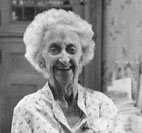
My mother is renowned for her creative cooking. This year, during the dog days of summer, she served up a spectacular two-layer blueberry-raspberry shortcake.

I wondered how a British-born-and-bred woman came to make shortcake of any kind, let alone such a splendid variation on the classic North American strawberry dessert.

I asked her if it was a dessert she had made in England before she migrated to Canada in the 1960s.

“I didn’t make it in England because I’d never heard of it,” she explained. “The first time I had it was at a party in Toronto.”

PROFESSIONAL LIFE

My mother moved to London by herself from a small village at the age of 14 during the Second World War. She worked as a nanny and then became a cook.
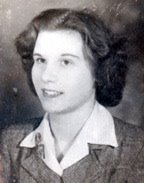

She looked after a boy in Chepstow Villas in Notting Hill for several years, but one of her most memorable employers was Bill Linnet, a theatre producer who lived in Westminster behind the Abbey. He always ensured that she and her friends got tickets to see the plays he produced in the West End. His chauffeur taught her to drive.

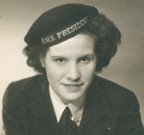
She joined the Women's Royal Naval Service to become a Wren because she wanted to learn to drive a truck. She was trained in Reading and then--the same day the Queen was married on November 20, 1947--she was sent to Greenwich where she was stationed as an officer's steward.


She met my Canadian-born father in London in the mid-1950s when he was working as a journalist on the old Nordesk for Reuters on Fleet Street.

He had lived in a house in Bayswater where she lived and went to collect his mail. He invited her out.

She first moved to Canada some years after she married him. Before she moved to Toronto they socialized with his Canadian friends and colleagues in London.

"Canadians in London went on about the awful food in Britain," she said, which led her to expect excellent cuisine in Canada. She was sorely disappointed.

INTRODUCTION TO CANADIAN FOOD

The first Canadian food she ate was a sandwich she bought on the train from Montreal to Toronto after disembarking from the Italian-owned ship, the Homeric, which had a Greek crew.

“It was revolting,” she said. “I had a roast beef sandwich because everyone had gone on about it, and it stuck to the roof of my mouth.”

She described the party she attended upon her arrival in Toronto where she first ate strawberry shortcake as typically “suburban Canadian.”

“It was the worst night of my life,” she said. “I walked in and there were about 50—all blond—women.”

The dessert was a frozen pound cake with frozen crushed strawberries and fake whipping cream on it.

FAMILY

My mother grew up in a village in the south of England during the Great Depression.
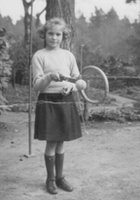

My grandmother worked as a cook in big houses. One of them was called Hillview. It was owned by Cecil Wray, the former governor of the Malay States. The Wrays had made their fortune from rubber in Malay and Kenya.

She worked also for the Ash family who made their money from the cotton industry in Manchester.
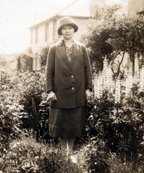

My grandfather served in the Royal Navy on HMS Barham and fought in the 1916 Battle of Jutland in the First World War.
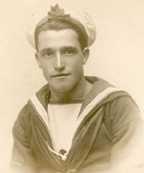

He became a gardener after he was forced to retire from service in 1936 after 24-and-a-half years because of a serious knee injury. He had signed up for 25 years of service at 17.


My mother's brother, my uncle, who was 10 years older than her, served on a tank crew in the British eighth army and fought in the North African and Italian campaigns of the Second World War. After the war he worked for the post office and played accordion in a band.


LIVING WITH RATIONS

Food was rationed during and after the war. Meat, butter and eggs were rationed. Everyone grew his or her own vegetables.

“Our Sunday joint was just a few ounces,” my mother said.

My grandparents kept chickens and rabbits. People in the village registered with them to get rationed eisenglass eggs, which were a type of pickled egg. When the chickens got too old to lay eggs they were used for eating.

My grandfather had a goose named Pickles that was given to him by Commander Wrightson, a man for whom he worked at Dower House.

Wrightson helped him get a decent pension from the Navy.

"People shared food," my mother said. "If there were a lot of eggs, people got lots of eggs."

One of their neighbours in the village had throat cancer and everyone gave him bananas when they got them because he couldn’t eat much. They didn’t get much fruit.

My grandmother made dandelion wine and cheese.

Although the war ended in 1945, it wasn’t until the Queen’s coronation in 1953 that rations came off candy.

ADJUSTING TO CANADA

My mother hated Toronto the first time she lived there, but my paternal grandmother, with whom she and my father lived, was very empathetic.


My mother said it was because my grandmother, who was originally from Shediac, New Brunswick and married a Baptist minister, understood what it was like to relocate with children. She lived in several places in the Maritimes and Ontario with my grandfather who served at five different churches in five different cities during his lifetime.


“She came from the Maritimes to Ottawa and it was a big shock to the system,” my mother said. “She left her family behind.”

As to why she started making strawberry shortcake, my mother said: “I don’t know why I made it, it was something all Canadians had. “ ~

OTHER CREATIONS