Dec 28, 2006

Mysterious Cornish mini-mountain


This is a view of St Michael's Mount, a 12th Century castle in Cornwall near Penzance.


At low tide people walk across to the island from the village of Marazion on a causeway, but at high tide they go by boat.


The day I took the boat across with my cousins in October the water was very rough and I thought I would vomit from seasickness.


The vistas of the wild Cornish sea and craggy cliffs from the mount are spectacular.


From some of the castle windows the view is only of the sea.


On the way up the mountain there is a giant's heart in the path.


What castle would be complete without a small mummified cat among its many treasures?


The trip back to the mainland was much better because I sat near the captain in the open air instead of under the plastic cover.

Dec 17, 2006

Robbery in Tregenna Place, St. Ives


As I was going to St. Ives
I met a man with seven wives
Every wife had seven sacks
Every sack had seven cats
Every cat had seven kittens
Kittens, cats, sacks, wives
How many were going to St. Ives?


So goes the old rhyme.

When I went to St. Ives I witnessed a robbery.


My cousins took me to the Cornish seaside town, which has a population of just over 11,000, during my recent visit to England.

It took us about two hours by car from their town in Devon to get there.

We dropped off our belongings at the Carlyon Guest House before heading out to see the Tate St. Ives and the Barbara Hepworth Museum and sculpture garden.

As we wandered down Tregenna Place past the Cornish Stone Co. shop, I heard a smashing sound and some shouting inside. I realized it was a robbery and dialed 999 to alert the police.


Quite a crowd gathered.

At that point I knew only that I was in St. Ives. I passed the phone to a local man who answered questions from the police.

The robber was enraged because the staff inside the shop told her that the cash register was broken and that they couldn't open it.

She smashed up the interior of the shop and then shoveled jewellery into a black suitcase on wheels and headed out the door.


The robbery was executed messily.

It made me think about "In Cold Blood" and the mess of the crime undertaken in that book.

Years ago, when I worked at Morgan Pharmacy in Georgetown in Washington, D.C., the owner told me to hand over the cash straight away if we were robbed. I couldn't understand why the women in the Cornish Stone Co. didn't hand over the cash to get rid of her. I was afraid she had a weapon.

It was about 15 minutes from the time I called the police until the criminal left the shop and started wheeling her case up the street with two men in pursuit. I realized too late that we had no photos of her in action inside the shop because I was preoccupied with the police. I did take some as she fled.


We hung around for a while and gave our contact information to one of the shop women so the police could reach us if necessary. We didn't want to waste more time waiting when we had so much to see.

There was no sign of the police by the time we left, which was about 20 minutes later.

Later, local people told us they weren't surprised that the police didn't show.

They phoned me about seven hours later when I was in the midst of watching the Chelsea football game in a pub. The constable thanked me for my help and said the suspect had been apprehended. He'd heard I had photos and information about the crime. He said they wanted to interview me the following morning. I agreed.

But then the next day after hearing all the tales about the local police, I said to my cousins, let's high-tail it out of town and if they want to catch up with me later they can do so when we are back in Devon.

We wanted to go to the Eden Project that day.

I never heard from the police again.

BARBARA HEPWORTH MUSEUM & SCULPTURE GARDEN

Barbara Hepworth (1903-1975) died in a fire. She lived and worked in what is now part of the museum from 1949 until her death. Her studio room was left as it was at the time, which means it is open to the elements and her tools are rusting.


The garden is peaceful. It features several organic bronze sculptures of various shapes and some tropical foliage ~


Oct 12, 2006

A salute to Mrs Moon's on Fleet St.

After a recent trip to England, these electronic clippings about the last days of Mrs Moon's pub on Fleet Street landed in my email inbox--sent by a friend. Click on them for a taste of nostalgia about the bad old days on the Street of Shame. When I was there the ghosts still seemed to be roaming.

~ Published in February 1984 ~


FLEET STREET TODAY


The Cheshire Cheese pub can be seen on the left in the picture above, which is a view of Fleet Street looking east toward St. Paul's Cathedral. The new building on the right is where Mrs Moon's pub once stood.


The Cheshire Cheese was rebuilt in 1667, the year after the great fire of London.


This lane runs between St. Bride's Church and Fleet Street. In the old days, when children were not allowed inside pubs, they could play outside in this lane or in the churchyard while their journalist parents were imbibing at The Bell.

St. Bride's was designed by Christopher Wren, the architect who designed St. Paul's Cathedral. It was built as a place of worship for the workers constructing St. Paul's.


This is a view of The Bell pub taken from the upper deck of a bus on Fleet Street.


There are no longer any news organizations on Fleet Street. When Reuters sold its 85 Fleet Street headquarters last year it became the last news organization to leave. The distinctive St. Bride's "wedding cake" spire can be seen above the building, which is shrouded in scaffolding.


The Reuters London and online bureaux are now in Kildare House on Dorset Rise. St. Bride's is behind the building on the left.


Reuters global headquarters is now at Canary Wharf. A display board shows some of the pictures and stories that are posted on the Websites in Toronto.

Oct 3, 2006

Motorboats, rowboats & automobiles


Getting to Leech Lake from Toronto is a bit of an odyssey.

The drive to Espanola takes about five hours, the motorboat portion of the trip takes about half an hour, hiking through swampy bush takes about 20 minutes and rowing takes another 20 minutes.


It’s necessary to take everything that will be needed, but no more, so that the knapsack isn’t too heavy to carry.

Planning the trip in the fall when the forecasts show rain and very cool temperatures is tricky because it means lugging gear for different types of weather.


I took a protective anti-bear jingle bell—just in case—because hunters bait the bears on the path through the bush.

The driving was good, and the journey on the way there was pretty uneventful, except that I parked in a spot designated for parents and children at the grocery store in Espanola.


The weather was cloudy and wet at the cabin except on the last night when it was clear enough to have a campfire and see the Milky Way.


Minty hot chocolate spiked with dark rum helped dispel the chill.

The loon swam on the lake calling out its distinctive, haunting cry. Apart from that I didn’t see much wildlife except for a rabbit and some migrating birds.


A goldfinch flew into the cabin window and dropped dead on the ground.

Honking Canadian geese flapped over the island one afternoon, but gunshots rang out and the birds fell silent.

I found the skull of a small animal and the lower jaw of another animal while tramping around the island.


I saw a late-season frog hopping and a dead fish floating in the lake.

There were a few tired old mosquitoes buzzing around making half-hearted efforts to pierce through human skin for fresh blood.

I managed to thwack each one of them and remained unscathed.

The return to civilization was trickier because of the high winds and rain. ~

Sep 13, 2006

Four times to the opera in a week


For a period of time when I was a child, my father and I would set out on our bicycles on Saturday afternoons to tour various used book and antique shops—or junk stores as they were then called—in the Glebe and Centre Town neighborhoods of Ottawa.

One of my favourite shops was an antique store on Third Avenue, just west of Bank Street, called The Gay Blade.

At the time, the term “gay blade” referred to a dashing young man. I don't recall if the proprietor of the shop fit that bill.

I’d paw through the odds and ends in The Gay Blade with the sound of grand opera blaring, broadcast, then as now, on the CBC FM radio show Saturday Afternoon at the Opera.


One weekend we arrived and the shop was silent. My father asked the owner why he wasn't listening to opera.

The owner explained that CBC was broadcasting an Italian opera. Being German-Canadian, he did not think it worth listening to, in fact, he didn't even consider it to be opera.

I was reminded of that incident this week after attending the dress rehearsals of Richard Wagner’s four-part German 19th-century epic Ring Cycle at the new Four Seasons Centre for the Performing Arts in Toronto.

Sitting through 15 hours of opera in one week seemed a daunting prospect at first, but I wasn’t bored once.


The singing, music, sets and costumes combined to create a spectacular experience. Of the minor characters, I particularly liked the forest bird who helped Siegfried.

It’s been a long time since I’ve sat through rehearsals.

A photographer snapped hundreds of pictures during the performances. I took mainly photos without flash when the lights were up in the house. I didn't risk it during the performances.

During one intermission, I rode the elevator to the top level and walked down floor by floor.

The upper floors are edged with perilous, low glass half-walls which give gut-churning views of the front-of-house foyer on the orchestra level.


Vertigo kicked in on the top floor. Sickened by the altitude, I got down on my hands and knees and crawled to the edge of the precipice to take photos of the view through the glass wall.

A storey lower, on the fourth level, I was told by an usher not to take photos because, she said: "the theatre is under copyright" ~

Aug 29, 2006

Stewing over Canadian cooking


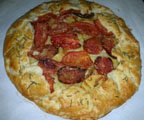
My mother is renowned for her creative cooking. This year, during the dog days of summer, she served up a spectacular two-layer blueberry-raspberry shortcake.

I wondered how a British-born-and-bred woman came to make shortcake of any kind, let alone such a splendid variation on the classic North American strawberry dessert.

I asked her if it was a dessert she had made in England before she migrated to Canada in the 1960s.

“I didn’t make it in England because I’d never heard of it,” she explained. “The first time I had it was at a party in Toronto.”

PROFESSIONAL LIFE

My mother moved to London by herself from a small village at the age of 14 during the Second World War. She worked as a nanny and then became a cook.
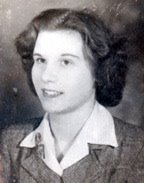

She looked after a boy in Chepstow Villas in Notting Hill for several years, but one of her most memorable employers was Bill Linnet, a theatre producer who lived in Westminster behind the Abbey. He always ensured that she and her friends got tickets to see the plays he produced in the West End. His chauffeur taught her to drive.

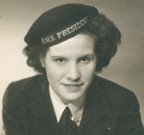
She joined the Women's Royal Naval Service to become a Wren because she wanted to learn to drive a truck. She was trained in Reading and then--the same day the Queen was married on November 20, 1947--she was sent to Greenwich where she was stationed as an officer's steward.


She met my Canadian-born father in London in the mid-1950s when he was working as a journalist on the old Nordesk for Reuters on Fleet Street.

He had lived in a house in Bayswater where she lived and went to collect his mail. He invited her out.

She first moved to Canada some years after she married him. Before she moved to Toronto they socialized with his Canadian friends and colleagues in London.

"Canadians in London went on about the awful food in Britain," she said, which led her to expect excellent cuisine in Canada. She was sorely disappointed.

INTRODUCTION TO CANADIAN FOOD

The first Canadian food she ate was a sandwich she bought on the train from Montreal to Toronto after disembarking from the Italian-owned ship, the Homeric, which had a Greek crew.

“It was revolting,” she said. “I had a roast beef sandwich because everyone had gone on about it, and it stuck to the roof of my mouth.”

She described the party she attended upon her arrival in Toronto where she first ate strawberry shortcake as typically “suburban Canadian.”

“It was the worst night of my life,” she said. “I walked in and there were about 50—all blond—women.”

The dessert was a frozen pound cake with frozen crushed strawberries and fake whipping cream on it.

FAMILY

My mother grew up in a village in the south of England during the Great Depression.
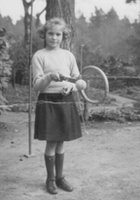

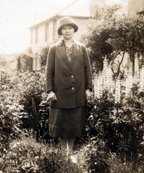
My grandmother worked as a cook in big houses. One of them was called Hillview. It was owned by Cecil Wray, the former governor of the Malay States. The Wrays had made their fortune from rubber in Malay and Kenya.

She worked also for the Ash family who made their money from the cotton industry in Manchester.

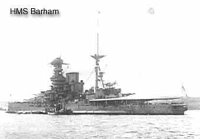
My grandfather served in the Royal Navy on HMS Barham and fought in the 1916 Battle of Jutland in the First World War.
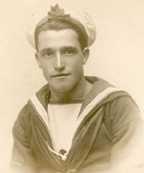

He became a gardener after he was forced to retire from service in 1936 after 24-and-a-half years because of a serious knee injury. He had signed up for 25 years of service at 17.

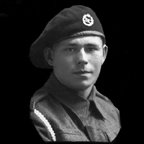
My mother's brother, my uncle, who was 10 years older than her, served on a tank crew in the British eighth army and fought in the North African and Italian campaigns of the Second World War. After the war he worked for the post office and played accordion in a band.

LIVING WITH RATIONS

Food was rationed during and after the war. Meat, butter and eggs were rationed. Everyone grew his or her own vegetables.

“Our Sunday joint was just a few ounces,” my mother said.

My grandparents kept chickens and rabbits. People in the village registered with them to get rationed eisenglass eggs, which were a type of pickled egg. When the chickens got too old to lay eggs they were used for eating.

My grandfather had a goose named Pickles that was given to him by Commander Wrightson, a man for whom he worked at Dower House.

Wrightson helped him get a decent pension from the Navy.

"People shared food," my mother said. "If there were a lot of eggs, people got lots of eggs."

One of their neighbours in the village had throat cancer and everyone gave him bananas when they got them because he couldn’t eat much. They didn’t get much fruit.

My grandmother made dandelion wine and cheese.

Although the war ended in 1945, it wasn’t until the Queen’s coronation in 1953 that rations came off candy.

ADJUSTING TO CANADA

My mother hated Toronto the first time she lived there, but my paternal grandmother, with whom she and my father lived, was very empathetic.


My mother said it was because my grandmother, who was originally from Shediac, New Brunswick and married a Baptist minister, understood what it was like to relocate with children. She lived in several places in the Maritimes and Ontario with my grandfather who served at five different churches in five different cities during his lifetime.
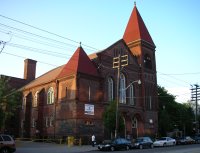

“She came from the Maritimes to Ottawa and it was a big shock to the system,” my mother said. “She left her family behind.”

As to why she started making strawberry shortcake, my mother said: “I don’t know why I made it, it was something all Canadians had. “ ~

OTHER CREATIONS